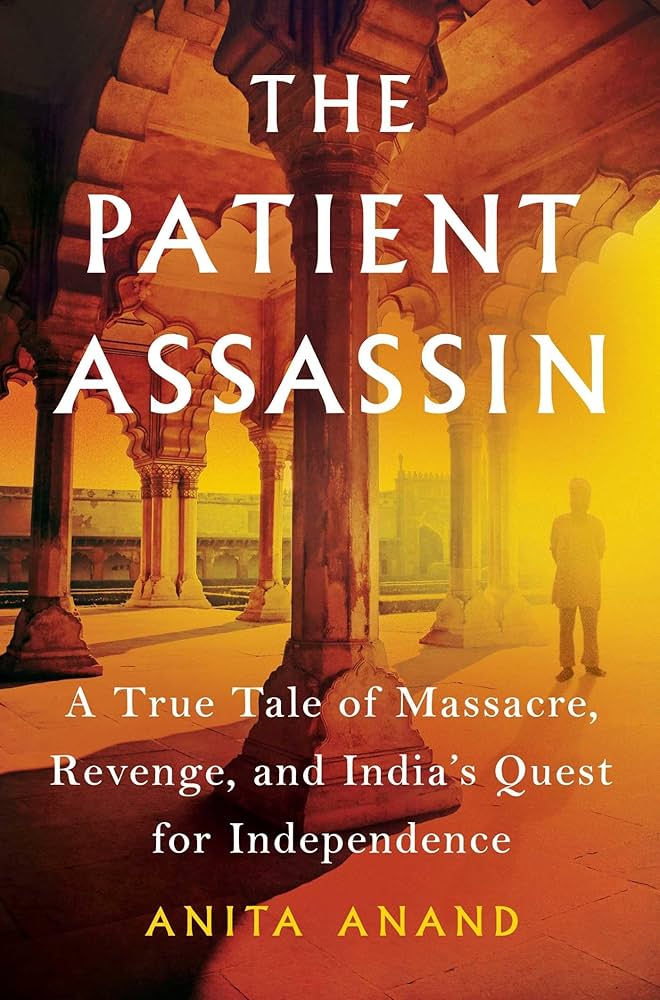
Patient Assassin: Seminar Note And Study Guide
The Mission
: To carefully read Anita Anand's Patient Assassin: A True Tale Of Massacre, Revenge And The Raj and write a 500+ word seminar note that represents your response to and analysis of the book. General instructions about the expectations for seminar notes are included on the assignment page under Seminar Notes. It is expected that your seminar note be formulated in direct response to your own reading of Anand's book.A Necessary Starting Point: Get a paper or digital copy of the Patient Assassin and spend several hours reading the book. There are paperback copies of Anand's book in the NIC Bookstore. I strongly encourage you to purchase one of these. Please don't submit seminar notes based upon a second-hand encounter with the book. Such a seminar note is really not a seminar note at all.
A Recommendation: Take detailed reading notes directly from the text based upon passages that you have highlighted as you've worked your way through the text. Use these as you complete your seminar note but then also hand them in with your assignment. You will receive Credit for these and I will also take these into consideration when I evaluate your First-Half Homework Portfolio and your Class Preparation and Contributions.
The Seminar Note Wrapper: Include a small section at the very end of your mini-assignment that responds to the following questions and prompts:
a) Did you get your own copy of Patient Assassin: A True Tale Of Massacre, Revenge And The Raj?
b) How much time did you spend reading this book and how much of it did you read?
c)
Did you take reading notes and, if so, how did you complete these?d) Did you use AI or any outside sources in completing this assignment? If so, please describe.
e) Briefly describe the process through which you completed this mini-assignment? Did you experience any difficulties with it and, if so, what were these?
Some Questions To Consider
***Note that while one or more of the questions below may be helpful to you as you think about your seminar note, the seminar note should represent your own response to the Patient Assassin rather than an attempt to answer all of these questions
Should Udham Singh be considered an Indian national hero? Why or why not?
To what extent does the story, nature, and meaning of the Indian independence movement look different when told through the life of Udham Singh rather than that of Mahatma Gandhi?
Brief chart the life of Udham Singh as chronicled by Anita Anand. What is most interesting and revealing about his life?
To what extent is Udham Singh commemorated in India today? Did you hear stories about him growing up? Was mention of him included within the school curriculum? To what degree, if at all, is he a controversial figure within India today?
When is political violence morally legitimate and to what extent is the story of Udham Singh an appropriate focus for exploring this large historical and philosophical issue?
How many of you have been to Jallianwala Bagh? How would you describe that experience? What connections would you make between your memories here and your reading of this book?
What most surprised you about the Patient Assassin?
What are the strengths and weaknesses of the Patient Assassin?
To what extent do you think Anita Ananad's background as a British Sikh whose grandfather was in Amritsar at the time of the Jallianwala Bagh Massacre provides her with a grounding to write a book that one cannot imagine from either an Indian or a non-Sikh English author?
What challenges do you think Anita Anand would have faced in writing this biography and how successful do you think she was in meeting those challenges?
To what extent is the Patient Assassin not just the story of Udham Singh but of Michael O'Dwyer? Who was Michael O'Dwyer? Trace his life and beliefs as portrayed by Anita Anand. What insights can this offer?
How successful is Anand is portraying not just Michael O'Dwyer but also other British officials as well, including General Reginald Dyer, not just with their great flaws, but in their full humanity? How fundamental is such an approach to this book?
How does Anand connect together the stories of India and Ireland in the Patient Assassin? When and how is Irish history mentioned and how do the links and comparisons with India broaden your understanding of Indian history?
Anita Anand also weaves the history of other countries and colonies -- including Russia, the United States, Germany, Mesopotamia, and Uganda -- into her account. How did the life of Udham Singh intersect with one or more of those places and how does the inclusion of such material expand and/or challenge your understanding of Indian history?
Describe the early immigrant communities of Punjabis in both Britain and the United States as portrayed in the Patient Assassin. How would you compare and contrast this history with your own experiences in Canada?
What did you learn about the Ghadar movement from the Patient Assassin?
To what degree do both World War I and World War II impact upon the history told by Anand?
There are different aspects to Udham Singh's identity -- egs. as an Indian nationalist, as a Sikh, as a Punjabi, as an Amritsari, and as a lower-caste orphan. How do these different identities fit together when the story of Udham Singh is being told and how does the framing of his identity and the meaning of his life change depending on who is telling the story?
To what extent have Sikhs folded the story Udham Singh into a near-sacred narrative of suffering, heroic sacrifice, and martyrdom stretching back at least to the Fifth Guru and then extending forward through Guru Gobind Singh and his family, Baba Deep Singh, Maharajah Duleep Singh, Bhagat Singh, to Jarnail Singh Bhindranwale and beyond? How does this particular framing both overlap with and differ from telling the biography of Udham Singh as the story of the Indian Independence Movement encapsulated within one life?
How would you compare and contrast the 1919 Jallianwala Bagh Massacre with Operation Blue Star and the 1984 Indian Army assault on the Golden Temple? To what extent is it important or appropriate to discuss these two events together?